We examine the benefits of self-care and ask some recent Transition Year (TY) students how they incorporate self-care into their day.
What is self-care?
Self-care means taking the time to do things that help you to live well and to improve both your physical and mental health.
Practising self-care means making choices and taking actions that help to maintain or improve your physical and mental wellbeing and your overall sense of health in your body and mind. Self-care isn’t selfish - it's about making your wellbeing a priority. By looking after yourself, you will be better able to do the other things you need to do.
Remember, everyone will have different self-care needs and practising self-care can start at any age. Identifying your needs and trying to build self-care into your plans can help you make your wellbeing a priority.
Ways to practise self-care
There are a number of simple steps you can take to help boost your wellbeing. Some examples of self-care practices include:
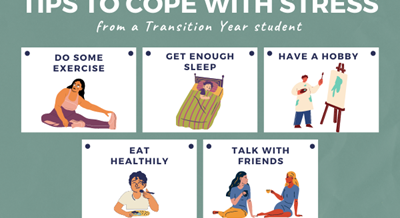
- getting regular exercise: Make it fun by doing something you enjoy (such as rollerblading, dancing to your favourite music or walking a dog) or invite a friend so you can both enjoy the benefits
- staying hydrated and eat well: Nourish your body and mind with what you need and what will fuel you for study, exercise and everyday living
- prioritising sleep: your body and mind need sleep to help them recuperate after a day. Try to limit caffeine, energy drinks and screens before bed to help you unwind and prepare for sleep
- making time to relax: Practising mindfulness, doing a crossword, listening to a podcast, journaling or reading can help your mind and body unwind
- practising gratitude: Taking the time to actively notice and appreciate what brings you joy can help to boost mental wellbeing, strengthen relationships and deepen your connection to the world around you
- practising positive self-talk: Self-talk plays an important role in shaping your emotions and actions and it can help to boost levels of self-belief and self-esteem. It can also increase levels of serotonin (our “happy hormone”) and decrease levels of cortisol (our “stress hormone”)
- staying connected with others: Reach out and stay in contact with friends or family members who can help to provide emotional support and practical help when needed.
Remember, tiny habits and changes can have a big impact. Start small by incorporating one change to your day and notice how it can positively influence you.
Benefits of practising self-care
Adding small acts of self-care to your everyday life can have a big impact. Regular practice can support you in many ways.
Self-care can help to:
- manage stress: Physical activity releases brain chemicals such as endorphins, dopamine and serotonin that can help to lower stress and help you sleep better. Mindfulness can also help to improve how you regulate your emotions and can help to lower your resting heart rate.
- lower risk of illness: Regular movement improves blood pressure and aerobic fitness (how well your heart, lungs and blood vessels can deliver oxygen to your muscles and how well your muscles can use that oxygen to produce energy)
- improve mood and mental wellbeing: Paying attention to your needs can help to reduce feelings of low mood. Taking part in activities that you enjoy can help to boost your mood and can help to reduce symptoms of anxiety and depression
- increase resilience: Regular self-care helps to build resilience, making it easier to cope with stress and bounce back from difficult situations
- Prevent burnout: By prioritising your needs, even when things are hectic, you can help to lower your risk of burnout.
Young people's self-care practice
Our TY Programme students shared some things they like to do for their self-care. Their ideas show that self-care doesn't have to be a huge commitment – it can involve small practices or conscious choices that you make for yourself. You could start by trying things that feel easy to fit into your life, like taking a short walk or writing down your feelings each day.
See our TY students' responses below:
“I enjoyed spending time playing online games with my little sister.”
“Yesterday, my brother had the day off. We were watching tv together while we were building Legos together.”
“I went volunteering.”
“I went for a walk with my best friend.”
“I went for a run.”
“I went to McDonald’s with my best friend.”
“I went on a walk and listened to music.”
“I watched a scary movie with my brothers.”
“I went for a walk with my cousins.”
“I listened to some music before sleeping.”
“I went on a walk with my friends.”
“I baked banana bread.”
“I called my friend who I haven't seen in a while.”
“I watched the stars with one of my friends after training.”
“I made dinner for my family.”